Author: Kartikey Swami
If you live with a small dog—especially a sensitive soul like a Dachshund, Chihuahua, or Yorkie—you probably know that look.
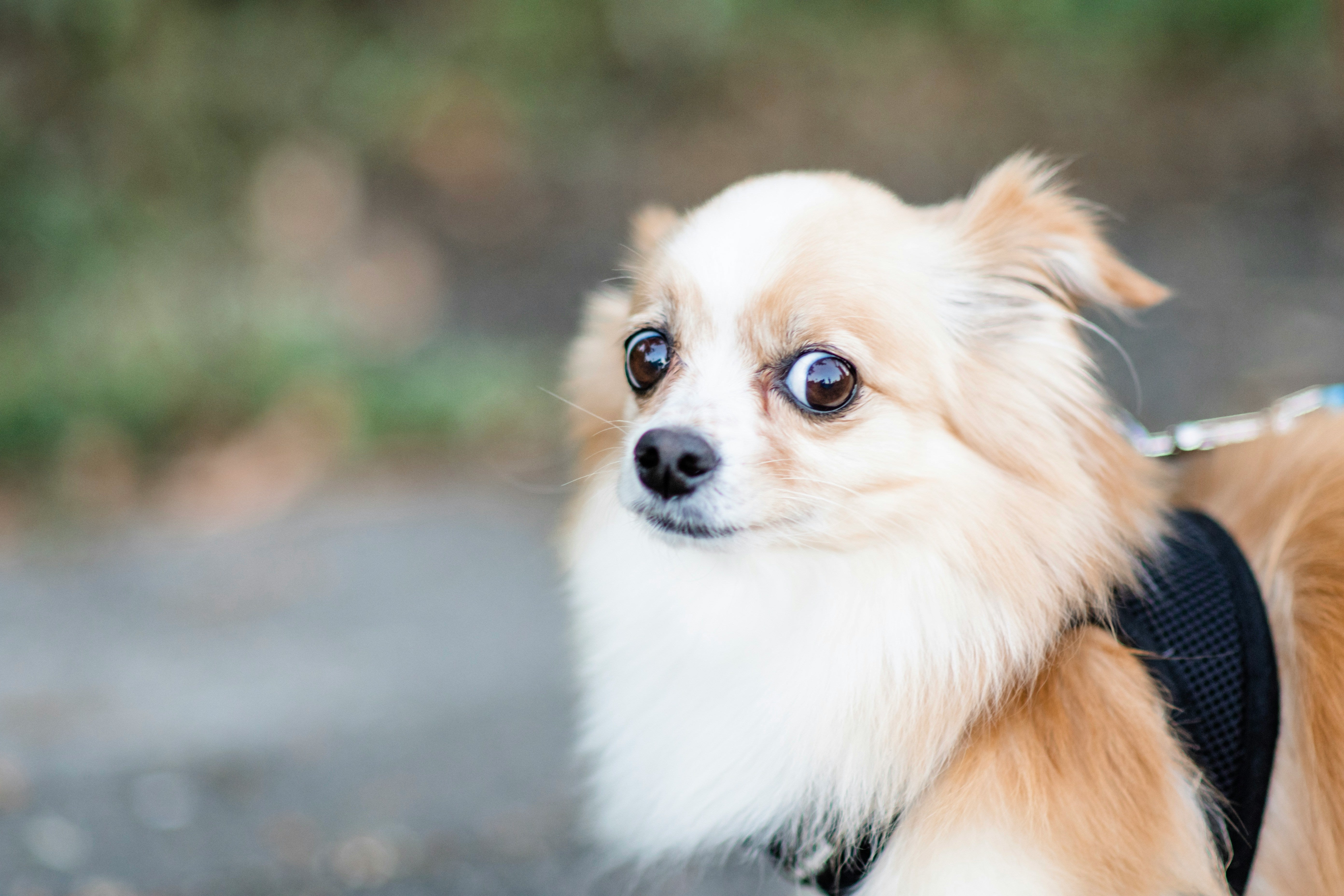
You clip on the leash, step outside, and suddenly your brave little clown melts into a pancake: body flat, ears pinned, tail gone, eyes wide as a truck rumbles in the distance. Or maybe it’s the rapid-fire barking at a stranger who only said, “Hi, buddy!”
People joke about “Small Dog Syndrome” and call them spoiled or dramatic. But if you pause for a moment and really look, what you’re seeing usually isn’t attitude.
It’s fear.
From a few inches off the ground, the world is loud and unpredictable. A casual footstep shakes your chest, a bus sounds like a jet engine, and hands reach down from the sky like cranes. Of course everything feels big.
Helping a small dog grow brave isn’t about pushing them to “deal with it.” It’s about quietly showing them: You’re safe. I see you. I’ve got your back.
This guide is about understanding the world from six inches up—and using simple, steady habits to help a worried little pup become a more confident adventure buddy.
Rethinking “Small Dog Syndrome”
It’s easy to misread nervous behavior as stubbornness or sass. A little dog who barks at guests, freezes on walks, or growls when someone tries to pick them up often gets labeled as spoiled or dramatic.
But most of the time, that behavior is simply self-defense.
From your dog’s perspective:
- Strangers lean over them like skyscrapers
- Big dogs rush up like freight trains with wagging tails
-
Cars, bikes, and strollers move unpredictably
If you were that small in that world, you’d be cautious too.
Shifting your mindset from “He’s being difficult” to “He’s feeling overwhelmed” changes everything. Suddenly you’re not correcting a “bad dog”—you’re supporting a worried friend.
That mindset shift is the foundation of true confidence building.
Learn to Hear the Whispers Before the Shouts
Most people only notice fear when their dog is already in full panic mode—shaking, hiding, barking, or lunging. But by that point, their stress level is sky-high.
Small dogs, especially, are experts at whispering their discomfort long before it becomes a meltdown. When you learn to catch those early signals, you can step in before their “emotion bucket” overflows.
Tiny Body-Language Clues You Don’t Want to Miss
Watch your dog in a new or mildly stressful situation and look for these subtle signs:
-
The “Lizard Lick” – quick tongue flicks when there’s no food aroundThe Sudden Itch – scratching that appears out of nowhere
-
The Dry Shake-Off – a full-body shake even though they’re not wet
-
Whale Eye – whites of the eyes showing as they turn their head away
-
The Paw Lift – one front paw hovering, unsure whether to move or freeze
One clue might just mean, “I’m thinking.”
Two or more usually mean, “I’m not okay. Please help me.”
A helpful guideline is the 3-second rule: when you notice those whispers, respond quickly—create distance, speak softly, or block their view with your body. It’s your way of saying:
“I hear you. You don’t need to scream to be heard.”
When Little Things Add Up: Trigger Stacking
Ever notice your dog handles a bicycle just fine one day but panics the next? That’s often trigger stacking—multiple small stressors piling up like water in a bucket:
-
Morning: a loud delivery hits the door (splash)
-
Afternoon: the vacuum appears (splash)
-
Later: a visitor tries to pick them up (bucket half full)
-
Walk time: a bike whizzes past (overflow)
On a calm day, the bike is nothing. On a stress-stacked day, it’s the final drop.
When your dog’s had a rough experience—a vet visit, storm, or bad interaction—offer a short cortisol holiday:
- Skip the busy neighborhood walk
- Do sniffing games at home or in the yard
- Keep visitors and surprises low-key
You’re not babying them. You’re giving their nervous system the reset it needs so real learning—and real confidence—can happen again.
Building Safety at Home: The Sanctuary and the Rhythm
Bravery outside starts with feeling safe inside. If your dog is constantly on alert at home—barking at every noise or being grabbed and overstimulated—they won’t have much emotional energy left for the world beyond the front door.
Create a “No-Touch” Den
Many small dogs, especially burrowers like Dachshunds, feel safest in a cozy bunker-style spot.
You can:
- Set up a crate with the door open and a blanket over the top
- Use a hooded “cave bed” in a quiet corner
- Add a familiar toy or something that smells like you
Then set one simple house rule:
If the dog is in the den, they’re invisible.
No reaching in, no pulling them out, no “just one cuddle.”
This gives your dog a guaranteed off-switch. When the world feels too loud, they always have a safe place to retreat—and that predictability alone builds confidence.
Boring Is Beautiful: The Power of Routine
For anxious dogs, predictability is medicine.
You don’t need a strict schedule, just a steady rhythm:
- Meals at roughly the same times
- Reliable potty breaks
- A simple bedtime routine: lower lights, softer voices, one last gentle outing
When your dog can predict their day, they don’t have to constantly scan the environment for danger. Their nervous system gets a chance to relax—and that calm baseline is what makes confidence possible.
Gentle Micro-Adventures: The Secret Confidence Builder
Many small dogs struggle not because they lack socialization, but because they’re over-exposed. A long walk past traffic, kids, barking dogs, and lawn equipment can feel like running a gauntlet.
Micro-adventures flip the script. These are short, controlled outings where the goal is calm observation—not “be brave” tests.
The Trunk Watch
Drive to a quiet park or calm parking lot. Open the back of your car, settle your dog on a mat, clip the leash, and simply sit together.
You’re not there to walk—you’re there to watch:
- A person walks by → soft praise, small treat
- A dog barks in the distance → gentle “You’re okay,” treat
- A bike rolls past far away → another calm reward
From this little “safe fortress,” your dog learns: the world moves, and nothing bad is happening to me. That lesson alone builds huge confidence.
The Sniffari
On a quiet path or corner of your yard, clip your dog to a slightly longer leash and let them choose the route. No heel, no agenda.
If they want to sniff one clump of grass for two minutes, let them. Sniffing:
- Lowers heart rate
- Burns mental energy
- Gives them control over distance and pace
For a nervous dog, a calm 15-minute Sniffari is more valuable than a tense 30-minute march down a busy street.
The “Statue” Game
When a dog freezes, most humans instinctively pull on the leash. To a scared dog, that pressure just confirms something is wrong.
Instead:
-
Stop where you areLoosen the leash
- Crouch slightly or stand still and look at what they’re looking at
- In a low, steady voice: “I see it. You’re okay.”
Wait. When they take even a tiny step, shake off, or glance at you, that’s the breakthrough moment:
- gentle praise
- move away from the scary thing, not toward it
You’re rewarding emotional recovery—not forcing them past their limit.
The “Look At That” Game: A Gentle Way to Build Bravery
If you’re ready for a more advanced confidence-building tool, the “Look At That” (LAT) game is a favorite among behavior professionals. It helps shift your dog’s emotional reaction from “Stranger = danger” to “Stranger = something good happens.”
Here’s how it works:
1. Find the Right Distance
Stand far enough from the trigger (dog, bike, person) that your dog notices it but isn’t barking, freezing, or lunging. This “safe distance” is where real learning begins.
2. Mark the Look
The moment your dog glances at the trigger, say “Yes!” or click. You’re marking the act of noticing, not bravery.
3. Reward the Check-In
Your dog will naturally look back at you for the treat. Pay well—small bits of cheese or chicken keep the game meaningful.
4. Repeat, Without Rushing Closer
The pattern stays simple:
See trigger → “Yes!” → treat → reset.
Over time, many dogs spot a trigger and immediately whip their head toward you as if to say, “I saw it—snack time?”
That shift—from fear to anticipation—is a massive emotional win.
Be Your Small Dog’s Advocate in a Big-Dog World
Sometimes the hardest part of living with a small dog isn’t the dog—it’s the people around you.
A tiny, cute dog is basically a magnet. Strangers squeal, rush over, bend from the waist, and hover their hands above your dog’s head. For a nervous pup, that can feel less like a greeting and more like being grabbed by a crane.
And every time someone overwhelms your dog, their trust in the world—and in you—takes a hit.
That’s why you’re allowed to be their bodyguard.
Simple phrases work wonders:
- “He’s feeling shy today, please ignore him.”
- “She’s in training and can’t say hi right now.”
- “He gets nervous with petting—please just let him watch you.”
Say it kindly, but don’t apologize. You’re not being rude; you’re being responsible.
When you consistently step in like this, your dog begins to learn: “I don’t have to bark or panic to protect myself. My human handles this.”
That sense of protection is one of the strongest confidence builders you can give a small dog.
Bravery Is a Squiggly Line: Celebrate the Quiet Wins
Your small dog may never be the life-of-the-party pup who barrels into crowds or charges into waves—and that’s okay. The goal isn’t to change who they are. The goal is to make their world feel safe enough that curiosity has room to breathe.
Progress is never a straight line. You’ll have:
- days when they stroll calmly past a bus…
- and days when a plastic bag skittering across the sidewalk makes them freeze.
That doesn’t mean you’re failing. It means they’re alive, learning, and having real emotions.
So celebrate the quiet wins:
- the day they sniff a new object instead of backing away
- the car ride where they settle a little faster
- the moment on a walk when they glance at a trigger, then look up at you for guidance instead of exploding
Those tiny shifts are the ones that whisper: “The work is working.”
From six inches off the ground, the world will probably always feel big. But with steady routines, a safe home base, gentle micro-adventures, calm communication, and your unwavering advocacy, your small dog can learn the most important lesson of all:
The world may be huge… but I’m not facing it alone.
And for a nervous little heart on four paws, that’s exactly where real bravery begins.
Author: Kartikey Swami
I’m a dog-loving writer with a deep interest in canine behavior, especially the emotional world of small and sensitive breeds. I enjoy sharing calm, compassionate guidance that helps pet parents understand their dogs better and build stronger, braver bonds with them.