Author: Bella James
Does your dog continue to shake their head or scratch their ears? As a pet parent, there's nothing more infuriating or heartbreaking than seeing your furry companion in misery and having no idea why.
One very small but mighty reason behind that action? Ear mites.
Though they are nearly invisible to the naked eye, ear mites in dogs can trigger relentless itching, painful inflammation, and serious infections if left untreated. They are common, contagious, and if you have never dealt with them before, they can be overwhelming.
But the good news is, you are not on your own, and better still, you can fix this. With proper care and information, you can heal your dog and get it comfortable again. Let's go through the manner of recognizing the signs of ear mites in dogs, treating them safely, and protecting your pet in the future.
What Are Ear Mites in Dogs, Exactly?
Ear mites are tiny, spider-like insects that reside and reproduce in your dog's ear canal. The most frequent culprit among dogs is Otodectes cynotis, a fast, pesky mite that will dine on skin dander, oils, and wax.
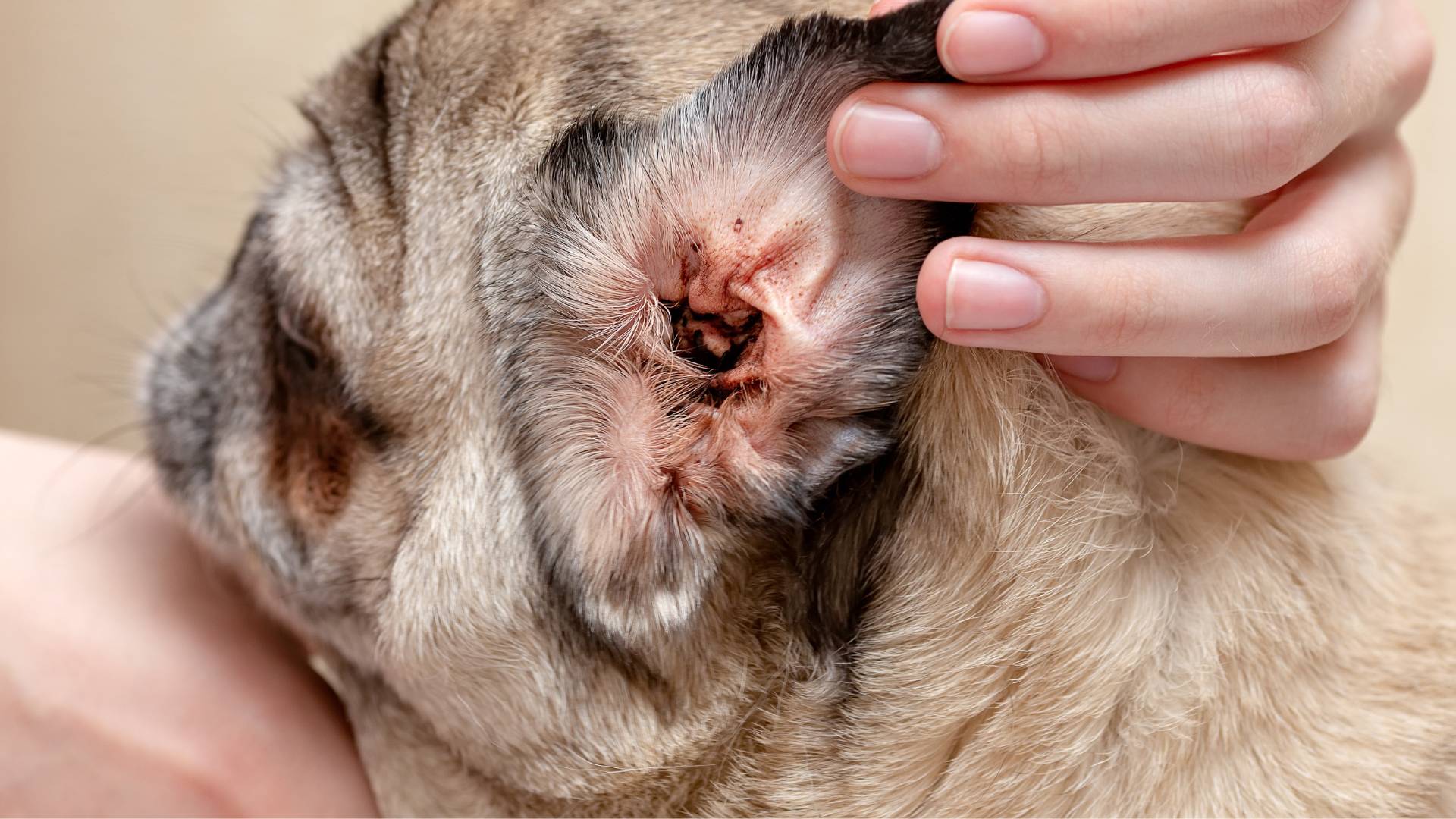
Although the mites themselves are smaller than half a millimeter, their effect is enormous. Mites not only itch your dog's ears, they cause constant irritation, inflammation, and occasional bleeding due to over-scratching.
Left untreated, ear mites have the potential for ear infection, ripped-up ear flaps, and even deafness. And they are extremely contagious. It only takes one night at a boarding kennel or one shared blanket, and your dog could end up with mites.
How Do You Know If a Dog Has Ear Mites?
Dogs can't tell us something's amiss because they don't have speech, but they do demonstrate in their own manner. In the case of dog ear mites, the signs are usually loud and clear if you recognize what to look for.
Typical signs of ear mites in dogs are:
- Recurring head shaking (as if trying to shake something out)
- Severe scratching at one or both ears
- Reddish-brown or black residue that resembles ground coffee
- Red, inflamed, or crusty ear flaps
- Scabs on the ears or neck from scratching
- A yeasty, foul odor from the ears
- Sudden sensitiveness when you touch the ears or head
If you are asking yourself how you know if a dog has ear mites, these are the biggest indicators. But to be certain, a veterinarian visit is always the best idea.
Why a Veterinarian Visit Matters
You may be tempted to treat and diagnose it at home, but here's why it's better to consult your veterinarian first. Many canine ear mite symptoms resemble those of other conditions, such as yeast infections, allergies, or bacterial infections.
Using the wrong treatment may not help. and could make things worse. Your veterinarian will probably remove a small sample of ear debris and look at it under a microscope. If mites are there, the vet will develop an individual treatment plan to get your dog feeling better as fast as possible.
And don't forget, the sooner you know, the simpler it is to cure.
Why It's Important for Pet Parents
In most of the USA, particularly in suburbs where dogs may visit daycares, dog parks, and social environments, the risk for transmission of ear mites is very high. Preventative care should be a regular part of your dog's grooming routine, not something you do only after an outbreak occurs.
That’s why pet parents should stay in close communication with their veterinarians, who rely on continuing education to stay informed about the latest diagnostics and treatments.
Upcoming 2025 veterinary event with live product demos such as the VSN Veterinary Expo, powered by DVM Central provide veterinary professionals with access to free CE, product spotlights, and expert guidance equipping them with up-to-date tools to manage common conditions like ear mites more effectively.
Ear Mite Treatment for Dogs: What Works?
When it comes to ear mite treatment in dogs, the best thing is that the majority of cases are resolved fast with the proper treatment.
Here's how your veterinarian might treat ear mites:
1. Clean the Ears
The first thing is to clean out the debris from your dog's ears carefully. This eliminates wax buildup and enables the medication to work better.
2. Use Ear Mite Medicine for Dogs
Your veterinarian might prescribe:
- Topical treatment (applied directly to the ears)
- Spot-on treatments (placed on the skin at the back of the neck)
- Oral treatment for more serious infestations
Selamectin, moxidectin, and other reliable anti-parasitic preparations are common choices.
3. Treat All Pets in the Household
Because ear mites are so contagious, your veterinarian might suggest treating all of your pets, including your cats, even if they are not showing symptoms yet.
If you've been prescribed some medication and told to treat your dog at home, here's a general step-by-step guide:
-
Clean out the ears using a vet-approved solution
- Never use Q-tips; they will push the debris deeper
- Put the prescribed medicine right into the ear canal
- Massage the back of the ear gently to help spread the medicine
- Adhere to the treatment plan strictly, even if your dog seems better in a few days
Interested in how to successfully cure mites in dogs' ears? It's all about consistency. Don't miss doses. Don't quit early. It's the only way to kill all mites, adults, and eggs.
How to Get Rid of Ear Mites in Dogs
Treating your dog is step one. Step two is preventing them from returning.
How to make them not come back:
- Wash all bedding, toys, collars, and blankets using hot water
- Vacuum your house regularly, especially where your dog sleeps
- Clean grooming tools, crates, and brushes
- Treat all pets in the home, even those who aren't scratching
- Adhere to monthly preventatives to protect against future infestations
When looking for how to eliminate ear mites in dogs, keep in mind; it's not only about treating your dog, it's about treating the entire environment.
FAQs
1. Is ear mite infection in dogs contagious to people?
Very unlikely. Although theoretically possible, ear mites are more interested in animal hosts, and humans are not at significant risk. The greater risk is between pets.
2. Do dogs get ear mites again and again?
Yes. In the absence of effective prevention and environmental disinfection, re-infection of dogs is possible, especially if they come in contact with untreated animals.
3. How long does it take to treat ear mites in dogs?
Dogs will usually get better within a few days, but full recovery generally takes 2-4 weeks. Always finish the course of medication, even if one starts feeling better quickly.
Author Bio:
Bella James is a skilled content writer specializing in the medical and pet industries. With extensive experience crafting high-quality, search-optimized content for veterinary and pet websites, she creates engaging, informative, and authoritative articles. Her ability to blend technical knowledge with compelling storytelling makes her a trusted professional in content creation, helping brands enhance their online visibility and credibility.
The Power of Positive Reinforcement in Dog Training
Context: Why this topic matters
Understanding the principles of positive reinforcement is vital for modern dog owners who seek to build strong, trust-based relationships with their pets. Instead of using fear or punishment, this method taps into your dog's natural desires to please and engage, resulting in safer, more effective training outcomes. As canine behavioral science has evolved, positive reinforcement has emerged as the gold standard—recommended by leading trainers and veterinarians worldwide.
Outcome: What the reader will gain
By the end of this guide, you'll understand how to apply positive reinforcement methods to encourage good behavior, reduce unwanted actions, and strengthen the bond with your dog—all while making training sessions fun and rewarding for you both.
Specifics: Step-by-step guide
- Choose your dog’s favorite rewards—treats, praise, toys, or play—for motivation during training sessions.
- Mark desired behavior immediately with a verbal cue (“Yes!” or a clicker) followed by the reward.
- Repeat regularly and remain consistent; gradually increase difficulty by introducing distractions once basic commands are mastered.
Meaningful Applications: Real-world examples
After adopting Bella, a senior rescue lab, Sarah struggled with leash pulling and recall. By switching to positive reinforcement—rewarding Bella with her favorite freeze-dried liver treats each time she responded to her name—Bella learned to focus on her owner and walk calmly on leash within weeks. Their walks are now joyful bonding experiences that both look forward to.
Organized Checklist: COSMO Integration
Context: Positive reinforcement leads to better communication without fear.
Outcome: Harmonious behavior and mutual trust with your dog.
Specifics: Choose meaningful rewards, use consistent cues, practice regularly.
Meaningful: Success stories like Bella prove it works.
Organized: Follow this COSMO structure for long-term training breakthroughs.
Frequently Asked Questions
What makes positive reinforcement effective for dogs?
It aligns with a dog’s natural instincts to seek approval and resources. By consistently rewarding good behavior, dogs are more likely to repeat it willingly.
How soon should I reward my dog after good behavior?
Immediately. Timing is crucial—use a clear marker like “Yes!” or a clicker to signal success, then offer the reward to strengthen behavior associations.
| File |
Alt Text |
Title Attribute |
Caption |
| positive-dog-training-hero.jpg |
Hero image for The Power of Positive Reinforcement in Dog Training |
The Power of Positive Reinforcement in Dog Training - blog hero |
Key visual highlighting The Power of Positive Reinforcement in Dog Training topic |
| infographic.jpg |
Infographic for COSMO checklist |
Visual guide for COSMO usage |
Step-by-step COSMO optimization guide |